
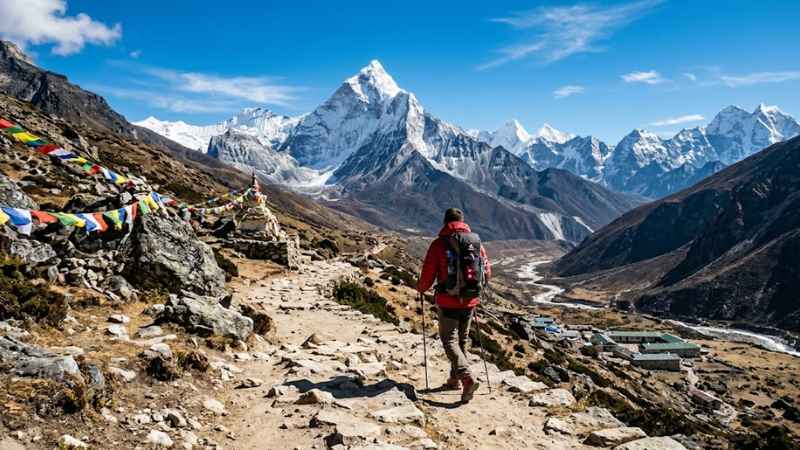
Most people picture Everest as a place only elite mountaineers can reach. The truth is simpler. A well-planned walk through the Khumbu valley can bring an ordinary, fit traveller to the foot of the highest mountain on Earth, with no ropes, ice axes or climbing skills involved.
This guide from Travelistaan covers the trail stage by stage, when to go, how to prepare your body, what to carry and how to think about your budget.
What Exactly Is the Everest Base Camp Trek?
The Everest Base Camp trek is a high-altitude walking route in Nepal’s Solukhumbu district. You fly into the mountain airstrip at Lukla, then follow stone-paved paths, forest trails and glacial moraine up to the base camp at roughly 5,364 metres. Most itineraries add a sunrise climb of Kala Patthar, a rocky ridge at about 5,545 metres, because Everest itself is hard to see from base camp.
Think of it as a slow conversation with the mountains. Each day you gain a little height, and the scenery changes from pine forest to yak pastures to bare rock and ice.
Route Overview: How the Trail Unfolds
Lukla to Phakding. A gentle first day. You follow the Dudh Koshi river, cross prayer-flag-draped bridges and warm up your legs.
Phakding to Namche Bazaar. A steep, tiring climb ends at the busy Sherpa trading town of Namche, where cafés, gear shops and bakeries line the hillside.
Rest and acclimatisation at Namche. A short hike to a viewpoint gives your body time to adapt, with the first proper glimpses of Everest and Ama Dablam.
Namche to Tengboche. A forest walk leads to the region’s best-known monastery, where evening prayers echo against the peaks.
Tengboche to Dingboche. The trees thin out and the landscape opens into wide, windswept valleys.
Dingboche to Lobuche. You pass memorial stones for climbers lost on the mountain, a sobering and quiet stretch.
Lobuche to Gorak Shep and Base Camp. The final push crosses rubble and glacier edges. After reaching base camp, you return to Gorak Shep to sleep.
Kala Patthar and the descent. A pre-dawn climb rewards you with golden light on Everest. After that, you head down faster than you went up, usually reaching Lukla in about three days.
Quick Reference Table
| Item | Details |
|---|---|
| Region | Khumbu, northeastern Nepal |
| Starting point | Lukla (about 2,860 m) |
| Highest point | Kala Patthar (about 5,545 m) |
| Typical duration | 12 to 14 days round trip |
| Daily walking | Around 4 to 7 hours |
| Difficulty level | Moderate to demanding because of altitude |
| Stay | Tea houses along the trail |
| Best months | March to May, September to November |
When Should You Go? A Month-by-Month View
- March to May: Rhododendron forests bloom and days are comfortable, though afternoons can bring clouds. This is also the main climbing season, so you may see expedition teams near base camp.
- June to August: Monsoon rain, leeches at lower levels and hidden views make this a poor choice for most trekkers.
- September to November: Skies are crisp and the air is clear. October is the busiest month, so book flights and lodges early.
- December to February: Very cold, especially at night, but trails are peaceful. Suitable only for well-equipped, experienced trekkers.
Is It Hard? An Honest Answer
The trail has no technical climbing. What makes it tough is the thin air. At base camp, each breath carries roughly half the oxygen you get at sea level. A fit person who rushes can feel worse than a less athletic person who walks slowly.
Practical ways to prepare:
- Start training at least two to three months ahead with brisk walking, stair climbing, cycling or hill hikes.
- Do a few long weekend hikes with the same shoes and backpack you will use.
- Strengthen your legs and core, since downhill days stress knees.
- Learn the early signs of altitude sickness: persistent headache, nausea, unusual tiredness, poor sleep.
- Walk at a pace where you could still hold a conversation.
The mountain does not reward the fastest walker. It rewards the one who listens to their body.
Understanding Altitude Sickness
Acute mountain sickness can appear in anyone, regardless of age or fitness. The most reliable protection is gradual height gain, enough water, proper rest and honest reporting of symptoms to your guide. If symptoms worsen, descending is the correct decision, not a failure. Always carry travel insurance that explicitly covers high-altitude trekking and emergency evacuation.
What to Carry
Clothing
- Moisture-wicking base layers
- Fleece or light insulated mid-layer
- Warm down jacket for evenings
- Waterproof jacket and trousers
- Trekking trousers, gloves, warm cap, sun hat
Gear
- Well-worn trekking boots and spare socks
- Sleeping bag suited to sub-zero nights
- Trekking poles
- Headlamp with extra batteries
- Daypack with rain cover
Health and extras
- Sunscreen, lip balm, UV-rated sunglasses
- Personal medicines and a basic first-aid kit
- Water bottle and purification tablets
- Power bank, since charging at lodges often costs extra
Permits and Paperwork
Trekkers need local permits to enter the Khumbu region. Fees and rules are revised by authorities from time to time, so check the latest rates before booking. Indian travellers should also carry valid ID and confirm entry documents before departure. Travelistaan handles permit processing for its guests.
What Decides the Cost of the Trek?
There is no single fixed price. Your budget changes with:
- Group size: Larger groups share guide and transport costs.
- Duration: Extra acclimatisation days raise the total.
- Services: A guide, a porter, or both.
- Lodging standard: Basic tea houses versus comfort lodges.
- Season: Peak months cost more.
- Flights: Kathmandu to Lukla flights are a major expense and can be delayed by weather.
It also helps to keep a small cash reserve for hot showers, charging, snacks and tips, since these are paid on the trail.
Why Trek with a Guide?
A local guide reads weather changes, spots early altitude symptoms, manages lodge bookings and shares stories about Sherpa culture that you would never find on a map. A porter reduces your load so you can focus on pacing and enjoying the walk. Hiring local also supports mountain communities directly.
Trekking Responsibly in the Himalayas
- Carry non-recyclable waste back down.
- Use refillable bottles instead of buying plastic ones.
- Walk on the left of prayer walls and stupas, as locals do.
- Ask before photographing people.
- Stay on marked paths to protect fragile slopes.
Frequently Asked Questions
Can a beginner do the Everest Base Camp trek?
Yes, if they are healthy, well-prepared and willing to follow a slow acclimatisation plan. Previous Himalayan experience helps but is not mandatory.
How many days are enough?
Twelve to fourteen days is the sensible range. Shorter plans reduce adjustment time and raise risk.
Will I see Everest from base camp?
Not clearly. The best views come from Kala Patthar and several points higher up the valley.
Is the trek safe?
It is considered a well-travelled route, but safety depends on weather, health, pacing and the quality of your guide and operator.
Is there internet on the trail?
Many lodges sell Wi-Fi or data packs, but speeds drop with height, so plan to be mostly offline.
Plan Your Everest Base Camp Trek with Travelistaan
From airport pickup in Kathmandu to permits, lodges, guides and a flexible itinerary, Travelistaan can build an Everest Base Camp trek around your dates, fitness and budget. Reach out to our team today, share your travel window and get a personalised plan for one of the world’s greatest walks.