
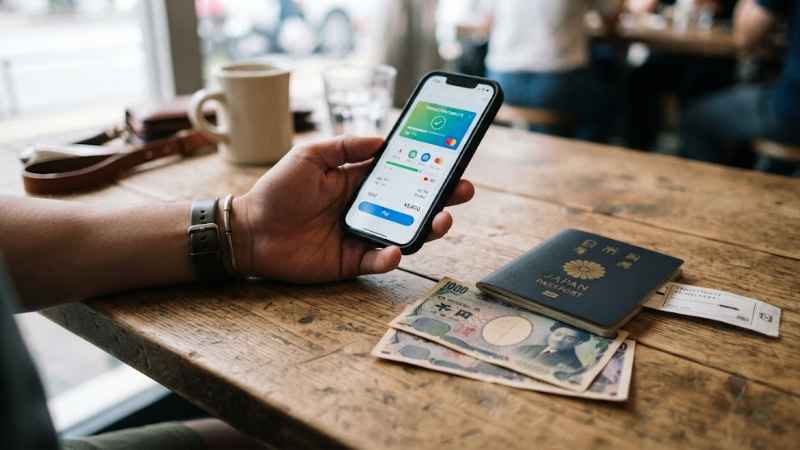
Most Indian travellers don’t lose money abroad because their destination is expensive. They lose it quietly, through the way they pay: a poor airport exchange rate here, a hidden markup there, a “Pay in INR?” prompt they tapped without thinking. None of these shows up as a big charge, but together they can take a real bite out of your trip budget.
The good news is that you can avoid most of it by knowing how each payment mode works. Here’s a clear breakdown of cash, international UPI, and forex cards, plus a simple split that works for most trips.
Quick comparison
| Payment mode | Biggest advantage | Biggest catch | Best for |
|---|---|---|---|
| Cash | Accepted almost everywhere, no hidden fee once exchanged | Weak rates at airport counters, theft and loss risk | Small purchases, tips, markets, emergencies |
| International UPI | Pay straight from your bank, no forex card or cash needed | Works in only about 10 to 11 countries, and your bank may apply a forex markup | Trips to countries where UPI is live |
| Forex card | Exchange rate locked at loading, low or zero markup on spends abroad | TCS on loading, plus possible load, reload, ATM or inactivity fees | Your main spending in most destinations |
| Debit or credit card (backup) | Convenient and widely accepted | Often a 2% to 3.5% foreign transaction markup, plus GST | Emergencies, or a genuine zero-markup credit card |
1. Cash: useful, but don’t rely on it alone
Cash is simple and universal. Once you’ve exchanged it, there are no further fees, and in many places (street food, local markets, small guesthouses, taxis) it’s the only thing that works.
The problem is where and how you buy it. Airport and hotel exchange counters usually offer weaker rates than authorised dealers or online forex providers. And a wallet full of cash is a single point of failure: if it’s lost or stolen, there’s no chargeback and no way to block it.
Use cash for: small daily spends, tips, local transport, and as a backup. Don’t use it for: your entire trip budget.
2. International UPI: great where it works, limited where it doesn’t
UPI abroad is genuinely convenient. You scan a merchant QR code and the payment is debited from your Indian bank account, with no foreign cash or card needed.
But there are two things to know before you rely on it:
- It only works in a limited number of countries. As of mid-2026, UPI is live in Bhutan, the UAE, Singapore, Mauritius, Nepal, France, Sri Lanka, Qatar, Cambodia and Greece, and Uzbekistan was reported as the latest addition on 30 August 2026. Different sources list slightly different countries, so confirm the current list on the NPCI International website before you travel. Several popular destinations, including Thailand and Malaysia, were not live for retail UPI in the sources we checked.
- It isn’t always markup-free. Some sources say the conversion is done at the system rate with no extra fee. Others report that banks apply a forex markup of roughly 1% to 3.5%, built into the exchange rate rather than shown as a separate line. Since this varies by bank, check the final INR amount in your app before you confirm, and compare it with a live exchange rate.
Also, you usually need to activate international UPI in your app before you leave India, and not every UPI app or bank account supports it. Don’t count on every shop accepting it either.
3. Forex card: the best all-rounder for most trips
A forex card is a prepaid card you load with foreign currency before you travel. The exchange rate is locked when you load it, so you’re protected from currency swings during the trip, and spends abroad usually carry low or zero forex markup.
For most people it’s the best main payment option. But “zero markup” doesn’t always mean “zero cost”, so read the fine print:
- The loading rate: the rate at which your card is loaded is set by the provider, so compare it with a live rate.
- Fees: check for loading fees, reload fees, ATM withdrawal charges (many cards give only a limited number of free withdrawals) and inactivity fees.
- TCS: loading a forex card counts as a remittance under the Liberalised Remittance Scheme (LRS), which can attract Tax Collected at Source (TCS) once your yearly remittances cross a threshold. TCS is generally claimable as a credit when you file your income tax return, but it ties up your cash in the meantime.
A quick note on TCS
TCS rules and thresholds on foreign remittances have changed several times in recent years, and sources currently differ on the exact figures. Before you load a large amount, confirm the current rate and threshold with your bank or a tax advisor. Credit card spending abroad is currently reported to sit outside LRS, which is one reason some travellers prefer a good zero-markup credit card for part of their spending.
The smart split: 70% forex card + 30% cash
For a short trip (under about a week), a split of roughly 70% forex card and 30% cash works well for many travellers. It gives you a locked-in rate on most of your budget, and enough cash to cover places that don’t take cards.
Think of it as a starting point, not a fixed rule, and adjust it to your destination:
- Cash-heavy destinations (rural areas, street markets, smaller towns): raise cash to 50% or more.
- Countries where UPI is live (UAE, Singapore, France and others): you can lean more on UPI for shops and restaurants, and carry less cash.
- Multi-country trips: a multi-currency forex card plus 20% to 30% cash as backup is a sensible mix.
- Always: keep one backup debit or credit card, stored separately from your main card.
Example: on a ₹1,00,000 spending budget, that could mean ₹70,000 on a forex card and ₹30,000 in cash. Treat the numbers as an illustration, not advice.
7 easy ways to avoid losing money abroad
- Say no to “Pay in INR”. If a card machine or ATM offers to charge you in rupees, decline and pay in the local currency. The conversion rate offered is usually worse.
- Skip airport exchange counters unless you’re stuck. Compare rates from authorised dealers or online providers before you fly.
- Compare the final INR amount with a live exchange rate, whether you use UPI or a card, to see the markup you’re actually paying.
- Switch on international use for your cards and UPI app before you leave, so a payment doesn’t get blocked at the worst moment.
- Don’t keep all your money in one place. Split cash and cards between your bag, your wallet and your hotel safe.
- Use ATMs carefully. Limit withdrawals to fewer, larger ones to reduce flat fees, and use ATMs inside banks where possible.
- Keep digital copies of your card details and emergency bank numbers, in case you lose a card.
Frequently asked questions
Is international UPI cheaper than using a card abroad? It can be, but not always. UPI skips the card step, but your bank may still apply a forex markup. Compare the INR amount shown in the app with a live exchange rate before you pay.
Do I still need cash if I have a forex card? Yes, in most cases. Cash covers markets, small vendors, tips and emergencies, and is a backup if a card or network fails.
Is a zero-markup forex card really free? It means no extra markup on your spends abroad, but you should still check the loading rate, reload and ATM fees, and TCS.
Can I use a normal debit card abroad? Yes, but it often adds a 2% to 3.5% foreign transaction markup plus GST, and ATM withdrawals may carry flat fees. It’s better as a backup than as your main payment mode.
Plan your trip with Travelistaan
Choosing how to pay is just one part of planning a smooth international trip. If you’d like help with itineraries, bookings and travel tips for your next holiday, message us on Instagram at @travelistaan_ and we’ll be happy to help.
Disclaimer: This article is for general information only and is not financial or tax advice. Exchange rates, fees, UPI country lists and TCS rules change often, so please confirm current details with your bank, NPCI International, or a qualified advisor before you travel.