
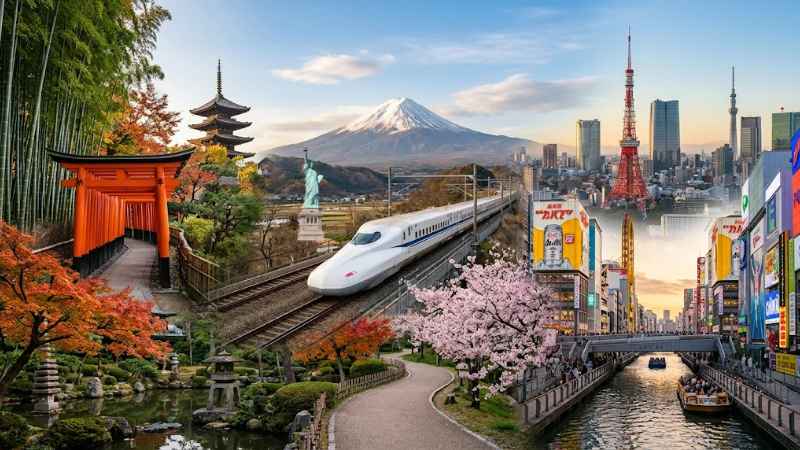
Most Japan itineraries online try to fit in everything: Tokyo, Mount Fuji, Kyoto, Nara, Osaka, Hiroshima, maybe Hokkaido. On paper it looks efficient. In reality, you spend your first trip abroad dragging a suitcase through train stations. This plan does the opposite. It covers three cities in eight days, keeps your hotel changes to two, and leaves room for the unplanned moments that people actually remember.
Before the Plan: The Four Decisions That Shape Everything
1. Your month. Japan changes completely by season. Late March to early April brings cherry blossom, and mid-November to early December brings autumn leaves in Kyoto. Both are beautiful and both are crowded and expensive. May, early June and October are calmer and cheaper. July and August are hot and humid, so plan indoor breaks. Check forecasts, since blossom and leaf timing shift each year. Our month-by-month international travel guide helps you compare Japan with other destinations.
2. Your route. Fly into Tokyo and fly home from Osaka (or the reverse). This “open-jaw” route saves a full day of backtracking. Ask whether your quote includes this.
3. Your pace. Eight days sounds long, but with transfers and jet lag, it’s really about six full sightseeing days. Don’t add Hiroshima or Mount Fuji unless you give up something else.
4. Your food needs. Japan can be hard for vegetarians because many dishes use fish-based stock. More on this below.
The 8-Day Itinerary
Day 1: Arrive in Tokyo. Land, clear immigration, and head to your hotel. Keep the evening light: a walk, a convenience-store snack, an early night. Jet lag from Delhi is mild, but flights often land mid-day or evening.
Day 2: Tokyo, the old and the quiet. Start at Senso-ji in Asakusa, then walk along the Sumida River. In the afternoon, visit Ueno or a garden such as Shinjuku Gyoen. End with the evening lights of Shibuya.
Day 3: Tokyo, the modern side. Explore Harajuku and Meiji Shrine in the morning, then Shibuya Crossing and the viewpoints. Choose either Akihabara for electronics and anime culture or teamLab for an immersive art experience, not both.
Day 4: Tokyo to Kyoto. Check out and take the Shinkansen (bullet train) to Kyoto, roughly two hours fifteen minutes. Drop your bags, then walk through Gion in the evening, when the old lanes are at their best.
Day 5: Kyoto classics. Go early to Fushimi Inari, before the crowds. Visit Kiyomizu-dera and walk the Higashiyama streets. Reserve the evening for a slow dinner.
Day 6: Kyoto, west side or Nara. Choose one. Arashiyama has the bamboo grove, Tenryu-ji garden and river views. Nara is a short train ride away and has friendly deer and the giant Buddha at Todai-ji. Doing both in a single day is rushed.
Day 7: Osaka. Move to Osaka, only about fifteen to thirty minutes from Kyoto by train. Visit Osaka Castle in the afternoon. In the evening, eat your way through Dotonbori, which is Osaka’s food street.
Day 8: Depart from Osaka. Keep this day free for last-minute shopping and airport transfer. Don’t schedule anything fixed before a flight.
If you want Mount Fuji or Hakone, the honest advice is to add two days, not squeeze it in.
Getting Around: What Actually Saves Money
The Japan Rail Pass often isn’t worth it for this route. Its price rose sharply in 2023, and a single Tokyo to Kyoto trip plus a few local trains usually costs less when bought individually. Do the sum before you buy anything. A Tokyo to Kyoto Shinkansen ticket costs roughly ¥14,000 one way, though fares vary by train type and seat.
Get an IC card. Suica, PASMO or ICOCA cards (physical or on your phone) let you tap through metros and buses without buying tickets.
Send your luggage ahead. Japan’s luggage-forwarding services (takkyubin) can deliver suitcases from your Tokyo hotel to your Kyoto hotel for a modest fee, so you travel on the train with just a small bag. It’s the single most useful tip for first-timers.
Visa and Entry for Indian Travellers
Indian passport holders need a visa for Japan. Applicants from several cities can apply for an e-Visa through the Japanese government system, and others apply through the VFS centre. The embassy fee is reported to be around ₹500 for single or multiple entry, plus a VFS service charge. Processing is generally about five working days, but apply well ahead of your travel date, especially for blossom season.
Typical documents include your passport, photo, travel itinerary, bank statements, income tax documents and proof of employment or business. Make sure everything matches, since inconsistent paperwork is a common cause of delay. Check the Embassy of Japan in India visa page for current rules. Before you land, you can pre-register your immigration and customs details on Visit Japan Web to speed up arrival. If you’d like your documents reviewed, Travelistaan’s visa assistance can help. The final decision always rests with the embassy.
What Affects the Cost
Rather than quote a number that will be out of date next month, here is what moves the budget:
| Factor | Why it matters |
|---|---|
| Travel month | Blossom and autumn leaf seasons raise flights and hotels |
| Hotel location | Central Tokyo and Kyoto are pricier, and rooms are small |
| Train choices | Individual tickets, rail pass or local passes |
| Meals | Convenience stores and casual restaurants are cheap, and fine dining is not |
| Attractions | Many temples charge small entry fees that add up |
| Exchange rate | The yen moves, so check before you budget |
Ask for an itemised quote that lists flights, hotels, transfers and sightseeing separately.
Food: A Practical Note for Vegetarians
Japan is easier than it was, but you still need to be careful. Many soups, sauces and noodle dishes use fish-based dashi even when they look vegetarian. Learn a few phrases, such as “niku to sakana wa taberaremasen” (I can’t eat meat or fish), carry a printed card, and look for vegetarian, vegan or Indian restaurants in Tokyo and Osaka. Convenience stores sell onigiri with plum or kelp filling, fruit and salads. If you eat strictly vegetarian or Jain, tell your planner early.
Mistakes First-Timers Make
- Adding too many cities into eight days
- Visiting Fushimi Inari or Kiyomizu-dera at midday in peak season
- Buying a rail pass without comparing costs
- Carrying large suitcases on trains
- Relying only on cards. Cash is still useful in smaller places.
- Leaving the visa to the last month
- Skipping advance booking for popular spots during blossom season
Who This Plan Suits
This route works well for couples, friends and families with older children, since it mixes cities, culture and food without too many moves. If you’re travelling with elderly parents, reduce the walking, choose hotels near stations, and consider cutting a day trip. For general destination information, JNTO is a helpful official source. If you’re still choosing a destination, read how to choose an international holiday or our guide to international trips under ₹1 lakh.
Plan Your Japan Trip with Travelistaan
Tell us your dates, group size and food preferences, and Travelistaan will build a Japan itinerary with flights, hotels, transfers and sightseeing in an itemised quote. You can contact us here or browse more destinations.
Pingback: Bank Statement for a Visa: How Many Months, How It Should Look and What Officers Notice - Travelistaan