
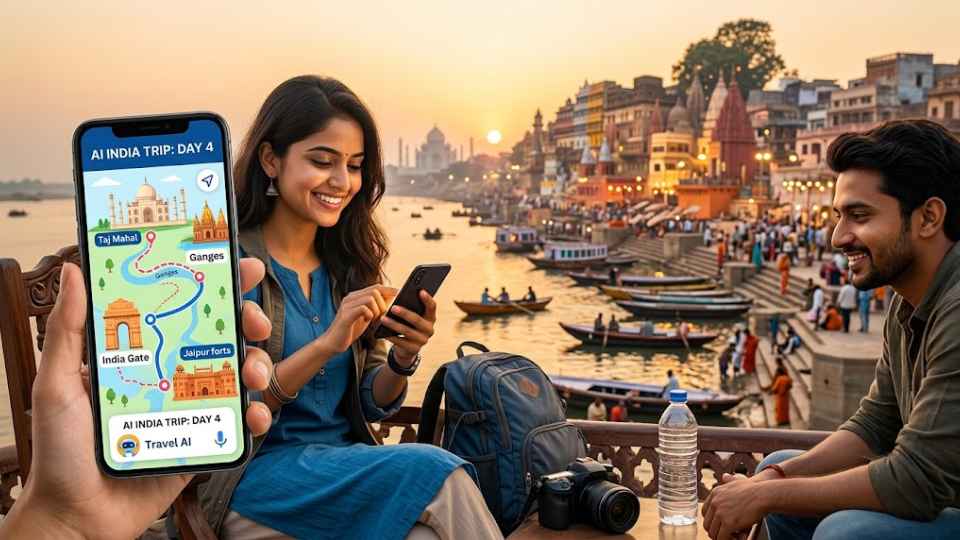
AI travel planning in India has gone from curiosity to habit faster than almost anyone expected. Skyscanner’s Travel Trends 2026 report, based on its search data and a survey of 2,000 Indian travellers, found that 86% of Indians are confident using AI to plan and book their trips, the highest share anywhere in the world. If you’ve already asked a chatbot to sketch your next holiday, you’re in very large company.
So the real question isn’t whether to use AI for planning. It’s which parts of a trip it handles well, and which parts you’d be unwise to leave to it.
First, What the 86% Actually Means
Read that number carefully. The report says Indian travellers are confident using AI to plan and book trips. That isn’t the same as 86% having done it, and it says nothing about how the trips turned out. Skyscanner also sells AI-powered search, so it has its own reasons to be enthusiastic about the trend. None of that makes the finding wrong. It just means the figure tells you about comfort and curiosity, not about results.
It’s still a useful signal. Travellers are clearly happy to start with a conversation instead of a search box, and that’s a real change in how holidays get planned.
Where AI Planning Genuinely Helps
Used for the right jobs, AI is a good planning assistant, and anyone who says otherwise is selling something.
It’s strong at the early, fuzzy stage. If you know you want warm weather in December, four days, and not too much walking, a chatbot can throw out a dozen ideas in seconds and explain the trade-offs. It’s useful for drafting a first-pass itinerary you can then correct, for comparing two destinations side by side, for building a packing list, for suggesting what to eat, and for explaining basics you’d otherwise spend an hour googling. If you’re still working out which country suits your travel style, brainstorming with AI first can save you real time.
Where It Tends to Fall Short
The trouble starts when a trip moves from ideas to commitments.
Rules that change. Visa and entry requirements are the clearest example. Thailand’s visa-free stay for Indians was cut from 60 to 30 days from 15 September 2026, according to guidance attributed to the Royal Thai Embassy in New Delhi, yet plenty of web pages still say 60. A tool that learned from older pages can repeat the old rule with total confidence. A wrong answer here doesn’t just cause inconvenience, it can mean refused boarding. Visa requirements shape itineraries for 48% of Indian travellers in that same Skyscanner survey, which tells you how much rides on getting this right.
Live prices and availability. A chatbot can describe a hotel. It can’t always tell you whether the room is free on your dates, what it costs today, or whether the rate includes breakfast and transfers. Those details decide whether a package is actually good value.
When something goes wrong. Flights get cancelled, bags go missing, a hotel overbooks. At that point you don’t need a suggestion, you need a person who can rebook, argue with a supplier and take responsibility for sorting it out. A chatbot can’t call a hotel at midnight on your behalf.
Group and multi-city bookings. Families, large groups and trips stitched together across several countries involve more moving parts: different visa timelines, room allocations, connecting transfers. One mistake in the chain can break the rest.
Changes and cancellations. Plans shift. Dates move, a family member can’t travel, a flight is rescheduled. Knowing the cancellation terms and who to call is part of what you’re paying for with an agent.
A Quick Comparison
| Task | AI is good for | A travel agent is better for |
|---|---|---|
| Choosing a destination | Brainstorming ideas and trade-offs | Matching options to your actual budget and dates |
| Itinerary | First draft, day-by-day structure | A plan checked against real timings and availability |
| Visa and entry rules | Explaining the general process | Current requirements and document review |
| Booking | Comparing options | Confirmed prices, inclusions and accountability |
| Disruptions | Suggesting what to do | Actually fixing it with airlines and hotels |
| Groups and families | Rough ideas | Coordinating rooms, transfers and paperwork |
A Sensible Way to Use Both
You don’t have to pick a side. A workable approach is to let AI do the early thinking: shortlist destinations, draft an outline, list questions you haven’t thought of. Then take that rough plan to someone who can verify it, price it and book it.
For anything involving documents, double-check the official source yourself. For Thailand, that means completing the free Thailand Digital Arrival Card on the government portal rather than trusting a summary. If you’re travelling abroad for the first time, our guide to the easiest international trips from Delhi and our list of countries Indians can visit without a visa are good starting points, and a plan built on your own budget will beat a generic one. Planning around a figure like ₹1 lakh per person? See what international trips under ₹1 lakh really look like.
A Fair Disclosure : AI travel planning in India
We’re a travel agency, so of course we’d say human help still matters. But we use AI tools ourselves for research and drafting, and we think the honest answer is that the two work best together. AI is quick and tireless at the thinking stage. A person is better at the stage where money, documents and deadlines are involved.
If you’ve got a rough plan and want it checked, priced and booked properly, our team can help. Travelistaan’s visa assistance can review your documents, and we can build the itinerary around your dates and budget instead of a template.
Get in touch with Travelistaan to turn your AI-drafted trip idea into a confirmed, properly checked itinerary.