
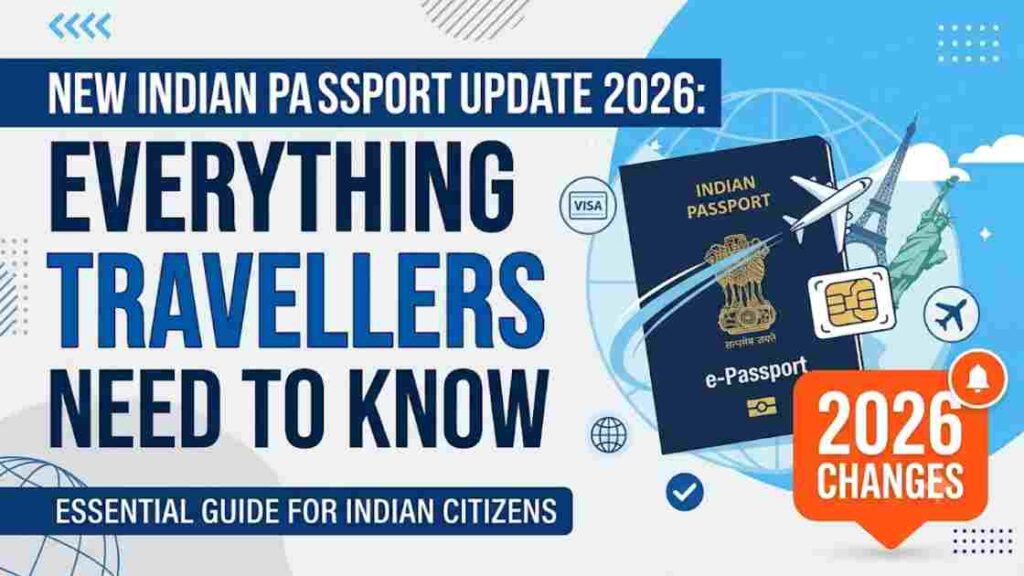
If you are planning your first international trip or getting ready to renew your existing booklet, there is some massive news waiting for you at the passport office. The Ministry of External Affairs (MEA) has rolled out significant structural updates under its Passport Seva 2.0 initiative. From advanced biometric e-passports to completely overhauled application fees that took effect on July 1, 2026, the way Indians travel abroad is getting a high-tech upgrade.
At Travelistaan, we track these updates closely so your international vacation planning remains completely seamless. Let’s dive straight into what has changed, how it affects your travel plans, and what steps you need to take next.
What Is the New Indian Passport Update 2026?
The biggest headline of the New Indian passport update 2026 is the phased nationwide rollout of chip-embedded e-passports alongside an updated fee structure. Rather than just a standard paper booklet, upcoming applicants across major Regional Passport Offices (RPOs) are systematically being transitioned to electronic passports.
Additionally, the underlying platform is moving over to Passport Seva 2.0, an advanced digital ecosystem engineered to significantly reduce processing times, strengthen data security, and streamline the police verification process.
What Is an Indian e-Passport?
An e-passport is a combined paper and electronic passport document. While it retains the physical pages you are used to for visa stamps, it features an embedded Radio Frequency Identification (RFID) chip and an antenna layered directly inside the back cover inlay.
[ Front Cover with Electronic Symbol ]
                 ↓
[ Traditional Paper Pages for Visa Stamps ]
                 ↓
[ Back Cover Inlay: Secure RFID Chip + Micro Antenna ]
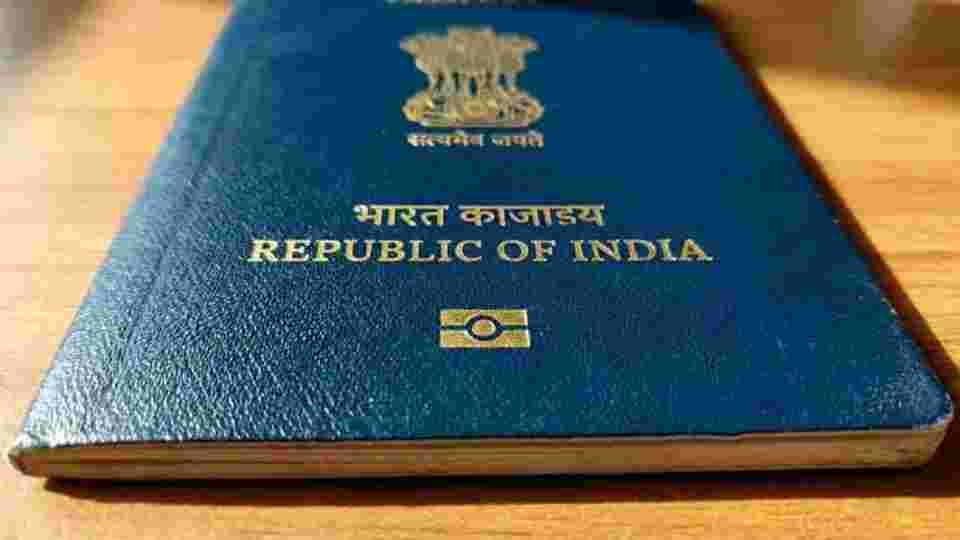
This chip securely stores the passport holder’s biometric data, including digital fingerprints, a high-resolution facial photograph, and the personal particulars printed on the booklet. Visually, you can easily spot an e-passport by looking for the small, globally recognized gold-foiled electronic chip symbol printed directly below the emblem on the front cover.
Difference Between a Regular Passport and an e-Passport
The physical appearance changes very little, but the security and technological enhancements are immense.
| Feature | Regular Passport | New Indian e-Passport (2026) |
| Data Storage | Printed text and photo on the bio data page only. | Printed text + duplicate data digitally signed and encrypted inside an RFID chip. |
| Security Level | Moderate (vulnerable to physical tampering or data forgery). | High (uses Public Key Infrastructure to make data cloning virtually impossible). |
| Immigration Check | Manual scanning and physical verification by border officers. | Swift biometric authentication via automated e-gates at global airports. |
| Visual Identifiers | Standard gold emblem on the cover. | Standard emblem + a distinctive gold international e-passport logo. |
Is the e-Passport Mandatory in India?
Critical Clarification: No, you do not need to panic or rush to replace your current booklet.
All existing valid passports issued by the Government of India remain completely valid until their official printed expiry date. The transition is happening in a phase-wise manner. Whenever you apply for a fresh passport or file for a reissue because your old one is expiring or out of pages, the system will automatically allocate an e-passport if your jurisdictional Passport Seva Kendra (PSK) has been technically upgraded. You can comfortably continue travelling on your traditional passport if it has remaining validity and blank pages.
Major Indian Passport Rule Changes in 2026
Apart from the physical introduction of the chip, two major regulatory shifts have occurred this year that every traveller must note:
1. Revised Passport Fees (Effective July 1, 2026)
The Ministry of External Affairs officially amended the Passports Rules, updating the application fees across all standard, Tatkaal, and replacement categories. For the first time in several years, the cost of securing a passport has risen, reflecting the high-tech infrastructure upgrades.
2. Streamlined Multi-Location Applications
Under Passport Seva 2.0, applicants can apply for a passport from any PSK or Post Office Passport Seva Kendra (POPSK) across India, completely independent of their permanent address. Your selected regional office will handle the logistics, and the background checks will automatically route to your current residing location.
The New 2026 Passport Fee Structure
Before hitting the payment screen on the official portal, make sure you are aware of the newly revised rates under the Passports (Amendment) Rules, 2026.
| Application Type | Booklet Size | Normal Fee (Post-July 1) | Tatkaal Fee (Post-July 1) |
| Fresh / Reissue | 36 Pages | ₹2,500 (was ₹1,500) | ₹5,000 (was ₹3,500) |
| Fresh / Reissue | 60 Pages | ₹3,500 (was ₹2,000) | ₹6,000 (was ₹4,000) |
| Lost / Damaged Replacement | 36 Pages | ₹5,000 | ₹7,500 |
| Lost / Damaged Replacement | 60 Pages | ₹6,000 | ₹8,500 |
Good to Know Benefit: The new 2026 guidelines introduce a 10% fee discount on fresh passport applications for children up to 8 years of age and senior citizens over the age of 60.
How to Apply for an Indian e-Passport
The application layout has updated to a cleaner, more intuitive interface on the official portal, but the baseline process remains user-friendly.
1.Register on the Official Portal:Step 1.
Visit passportindia.gov.in. Create a fresh user ID under ‘New User Registration’. Choose your current residential region to properly align your application.
2.Complete the Online Application Form:Step 2.
Click on ‘Apply for Fresh Passport/Re-issue of Passport’. Carefully fill out the fields (Applicant details, family data, address, and previous passport logs if reissuing). The system automatically tracks if you qualify for a standard or chip-enabled e-passport based on your local PSK setup.
3.Pay the Application Fee Online:Step 3.
Select your application track (Normal or Tatkaal) and book an appointment slot. You must complete the payment online using a credit/debit card, net banking, or UPI to officially freeze your appointment time.
4.Attend Your PSK/POPSK Appointment:Step 4.
Arrive at least 15 minutes early on your designated day. Carry your printed Application Receipt or show the official SMS invitation. Ensure you bring all original identity and address documents alongside one set of self-attested photocopies.
5.Biometric and Document Verification:Step 5.
Inside the center, your physical documents are cross-checked. A high-resolution digital photograph, electronic signature, and full set of fingerprints are captured on-site. These biometrics are encrypted and pushed securely onto your e-passport’s internal RFID chip.
Documents Required for Passport Application & Renewal (2026)
For a hassle-free appointment experience, keep these core documents organized. For a straightforward adult reissue/renewal with no change of core personal information, you strictly require only three items:
- Your Original Old Passport: Along with self-attested copies of the first two and last two pages, including any ECR/Non-ECR status or observation notations.
- Proof of Present Address: Aadhaar Card, recent utility bill, updated bank passbook featuring your photograph, or an officially registered rent agreement.
- Proof of Date of Birth: PAN Card, Birth Certificate, Aadhaar Card, or your driving license.
Passport Renewal vs. Reissue: What Frequent Travellers Must Know
A common point of confusion among travellers is the difference between “renewing” and “reissuing”. In India, passports are technically reissued, not renewed.
Instead of adding an extension stamp or a validation sticker to your old booklet, the MEA prints an entirely new physical book with a unique, fresh passport number.
Frequent flyers can safely apply for a reissue up to one year before their existing passport expires, or at any point after it has already lapsed. Travelistaan strongly advises booking your reissue appointment around 8 to 9 months prior to your expiry date, as many international destinations (and specific visa applications) strictly refuse entry if your passport has less than 6 months of validity remaining.
Frequently Asked Questions
What is the new Indian passport update in 2026?
The 2026 update includes the phase-wise rollout of biometric e-passports containing built-in RFID microchips, the introduction of Passport Seva 2.0 for faster processing, and revised application fees starting July 1, 2026.
Do I need to replace my old passport immediately to get an e-passport?
No. Your traditional paper passport remains completely valid for international travel until its official expiry date. You will automatically receive an e-passport when you apply for a fresh booklet or a reissue.
How much does a passport cost in India now?
As of July 1, 2026, a standard 36-page ordinary passport costs ₹2,500 for normal processing and ₹5,000 under the Tatkaal scheme. A 60-page booklet costs ₹3,500 for normal and ₹6,000 for Tatkaal processing.
What are the main benefits of an e-passport?
The primary benefits include enhanced identity protection against data forgery, global compliance with international security standards, and significantly faster custom clearance via automated biometric airport e-gates.
Why Map Your Next International Journey with Travelistaan?
A shiny new e-passport is your golden ticket to exploring the world, but navigating the ever-shifting landscape of tourist visas, hidden destination trends, and complex flight itineraries can still feel overwhelming.
That is exactly where Travelistaan comes in. We bridge the gap between your travel dreams and reality by providing up-to-the-minute visa comparison tools, fully curated budget packages, and dependable travel insurance consultations. Whether you are aiming for a hassle-free visa-on-arrival getaway or assembling documents for a complex Schengen tourist visa, our team ensures your documentation is flawless from day one.
Pingback: Dubai vs Thailand vs Bali: Which Is Best for Indians in 2026?