
There’s a particular kind of exhaustion that only a Delhi week can give you — the honking, the deadlines, the dust that settles on everything by Wednesday. And there’s a particular kind of relief that comes from realizing you don’t need five days off to fix it. You need forty-eight hours and a full tank of petrol.
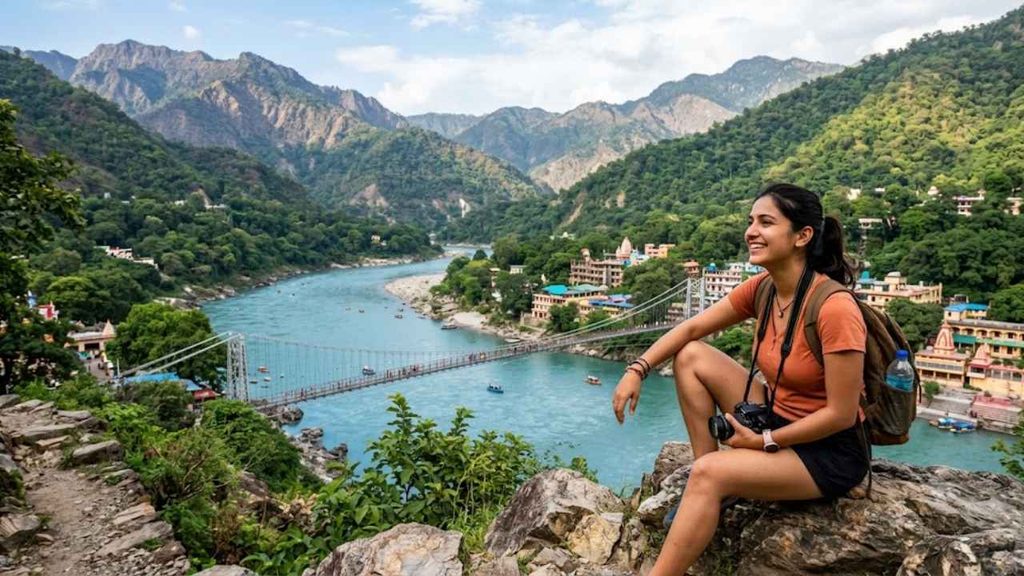
Rishikesh has been my go-to reset button for years now, and it earns that spot honestly. It’s close enough that you’re not burning your entire Saturday in transit, and different enough from Delhi that by the time you’re standing on Laxman Jhula watching the Ganga move under your feet, you’ll swear you left the city days ago, not hours.
Here’s how I’d spend a weekend there — tested, adjusted after a few trips that didn’t quite work, and now, I think, about as tight as a 48-hour itinerary gets.
Getting There for 48 Hours from Delhi
Rishikesh sits roughly 230 km from Delhi, and if you leave early enough to dodge the outbound traffic crawl through Ghaziabad and Meerut, you’re looking at about 5 to 6 hours by road via NH34. Leave by 5:30 or 6 AM on Saturday and you’ll roll into Rishikesh in time for a late lunch, with the whole afternoon still ahead of you.
If you’d rather not drive, the Dehradun Shatabdi from New Delhi station gets you to Haridwar in around 4.5 hours, followed by a 30-40 minute cab ride to Rishikesh. Overnight buses exist too, but I’ve never been a fan of arriving somewhere groggy at 5 AM with nowhere to go yet.
A quick, unglamorous tip: fuel up and grab breakfast before Muzaffarnagar. Options thin out once you’re closer to the hills, and you don’t want your first hour in Rishikesh spent hunting for parathas.
Day One: Settling In and Chasing the River
Afternoon: Check-in and a Slow Start
Skip the temptation to cram activities into the arrival day. You’ve just spent half of it in a car. Check into wherever you’re staying — Tapovan and Laxman Jhula are the areas I’d point you toward if you want cafés and walkability, while the stretch further upstream near Byasi is better if you’re craving quiet and river views without the crowd.
Have lunch somewhere unhurried. Little Buddha Café and Beatles Café both do a solid job of feeding a road-weary traveler without making you wait forever, and both look out over the water, which helps more than you’d think.
Late Afternoon: The Ram Jhula and Laxman Jhula Walk
This is less an “activity” and more a way of easing into the town’s rhythm. Walk across Ram Jhula, wander through the lanes on the other side, cross back over Laxman Jhula if you’re up for it. You’ll pass sadhus, backpackers, cows unbothered by any of it, and shopfronts selling everything from rudraksha malas to tie-dye pants. It’s touristy, sure, but it’s touristy in a way that still feels like it belongs there.
Evening: Ganga Aarti at Parmarth Niketan
If you take away exactly one thing from this itinerary, make it this. The evening aarti at Parmarth Niketan — or at Triveni Ghat if you want a bigger, louder version — is genuinely moving even if you’re not particularly religious. Hundreds of diyas floating downriver, chanting, the smell of incense, the sky doing that orange-to-purple thing it does in the hills. Get there by 5:45 PM to find a decent spot before it fills up.
Dinner afterward can be simple. Rishikesh isn’t a food destination in the fine-dining sense, but there’s something right about ending a day like that with a plain thali and an early night.
Day Two: Adrenaline, Then Altitude
Morning: White Water Rafting
Rishikesh’s rafting stretch, typically Shivpuri to Rishikesh or Marine Drive to Rishikesh depending on the season and water levels, is the reason half the people you’ll meet are even there. Book through a registered operator the evening before rather than showing up and hoping — weekends get busy. The 16-km Shivpuri stretch takes around 2.5 to 3 hours and hits a satisfying mix of rapids without requiring any prior experience.
Go early. Not just for the smaller crowds, but because the light on the river at 8 AM, with mist still sitting on the hills, is worth the alarm clock alone.
Midday: Lunch and a Breather
By the time you’re off the water, you’ll be hungry in that specific way only cold river water and adrenaline can make you. Head back toward Tapovan for lunch — somewhere with a rooftop, ideally, so you can just sit for a bit before the day asks anything more of you.
Afternoon: Neer Garh Waterfall or Kunjapuri Sunset Point
Here’s where the itinerary forks depending on your energy levels. If you want something low-effort and scenic, a short trek to Neer Garh Waterfall (about 20-30 minutes on foot from the base) is a nice, cool way to spend an hour.
If you’ve got more energy and want a proper payoff, drive up to Kunjapuri Temple instead, about 45 minutes from Rishikesh. It sits high enough to give you a genuinely wide Himalayan view, and if your timing lines up right, you can catch the sunset from there before heading back down for the drive home.
I’ll be honest — I’ve done both on different trips, and Kunjapuri is the one I’d pick again. There’s something about watching the hills fade into that last bit of daylight that makes the whole rushed itinerary feel worth it.
Evening: The Drive Back
If you’re driving back to Delhi, leaving by 6 or 6:30 PM gets you home by midnight, tired but in that good way. If that’s too much for one day, this is where a lot of people choose to add a third day rather than force the return drive — worth considering if your schedule has any flexibility at all.
A Few Practical Notes
Best time to go: September through November and February through April give you the clearest skies and most comfortable temperatures. Monsoon months bring rafting restrictions and landslide risk on the route, so it’s worth checking conditions if you’re traveling between July and mid-September.
What to pack: A light jacket even in warmer months — evenings by the river cool down faster than you’d expect. Quick-dry clothes for rafting, a change of clothes for afterward, and comfortable walking shoes for the ghats and bridges, which get crowded and uneven underfoot.
Budget: Rishikesh is forgiving on the wallet. Budget stays run ₹1,500-2,500 a night, rafting packages typically fall between ₹500-1,200 depending on the stretch, and food rarely stretches your budget unless you’re specifically hunting for upscale cafés. Fuel and tolls for the round trip from Delhi will likely be your biggest single cost if you’re driving.
One thing I’d tell my earlier self: Don’t overplan the second morning. Leave a little room for nothing in particular — a slow coffee by the river, one more walk across Ram Jhula. The itinerary works better with a bit of give in it.
Forty-eight hours isn’t much, but Rishikesh has a way of stretching time out once you’re actually there. You go for a break from Delhi and come back with something closer to a full reset — which, for one weekend, is a pretty good return.